
The Genesis Box Buggy concept brings motorsport thinking, wild design and four-wheel electric steering to the humble golf cart category.
Genesis has apparently looked at the golf cart and thought, “Cute, but what if it could frighten a valet?”
That seems to be the spirit behind the Genesis Box Buggy, a one-off concept vehicle that made its public appearance at the 24 Hours of Le Mans. At first glance, it looks like something that wandered out of a motorsports design studio after everyone had too much espresso. It has the stance of a dune buggy, the attitude of a paddock toy and the basic mission of a golf cart, though Genesis has clearly taken the word “cart” and stretched it until it snapped.
The Box Buggy is not a production model, at least not yet. Genesis has not released a traditional announcement explaining every detail, specification or future plan. Instead, the vehicle has become interesting partly because of what the company has not said. It appeared in official photos, showed up in the racing world and immediately raised the obvious question: What exactly is this thing?
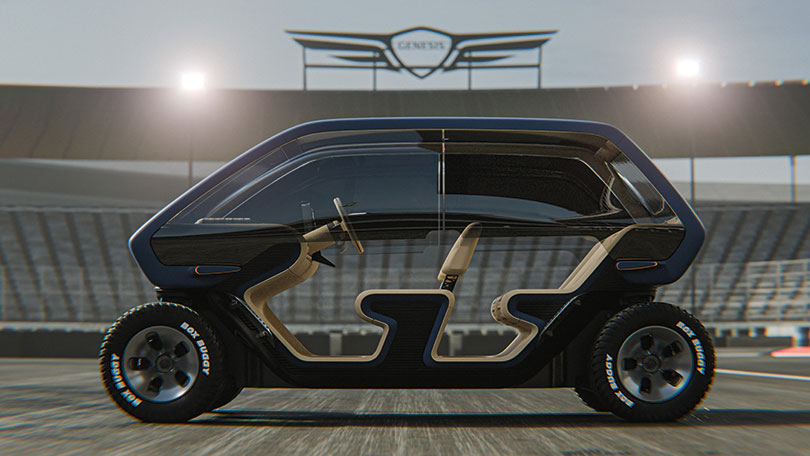
The answer appears to be part golf cart, part paddock vehicle and part creative flex from a luxury automaker with one foot in golf and the other stepping deeper into motorsport. Genesis is the official vehicle of the PGA Tour and has been connected to golf through major sponsorships for years. According to Genesis Chief Creative Officer and President of Hyundai Group Luc Donckerwolke, the brand decided it was time to design its own buggy.
Donckerwolke called it “the grand daddy of golf carts,” which is either a joke, a warning or both. He also said Genesis had sponsored golf for years but never had its own golf buggy, so the company wanted to create one and have fun with it. That sentence may be the closest thing to an official mission statement for the Box Buggy, and honestly, it works.
The hardware is where things get properly strange. The concept reportedly uses a setup similar to the Hyundai Mobis e-Corner System, which places an electric motor in each wheel and allows the wheels to turn up to 90 degrees in either direction. In plain language, this means the Box Buggy can move sideways, rotate in place and perform the kind of parking-lot tricks that would make a standard cart look like it was designed during the Eisenhower administration.
Each of the four motors produces about 40 horsepower. Donckerwolke said the buggy could reach 100 mph, which is a fairly ridiculous number for something with golf-cart DNA. There is no practical reason for most people to go 100 mph in a cart-adjacent vehicle, and that may be exactly the point. Concept vehicles are not always about practicality. Sometimes they exist to show what engineers can do when the normal adults leave the room.
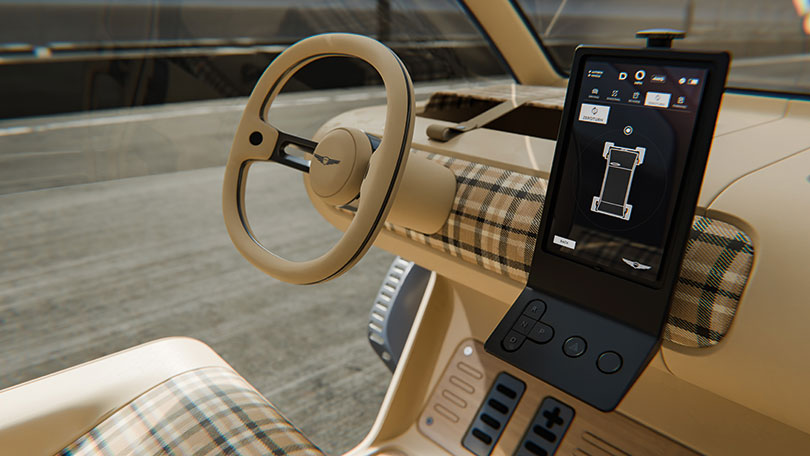
The battery is said to come from a Hyundai Tucson Hybrid, with a 1.49-kWh pack. Range details have not been announced, but the Box Buggy is not being positioned as a commuter, delivery vehicle or neighborhood runabout. It is a showpiece. It is designed to move people around paddocks, make appearances at racing events and remind anyone watching that electric mobility does not have to be boring.
The interior adds another wrinkle. Beige tartan fabric gives the cabin a golf-club feel, almost as if the vehicle was styled for a Scottish Open hospitality tent and then accidentally sent to Le Mans. That contrast is part of the charm. The Box Buggy is polished enough to belong under the Genesis name, but odd enough to keep everyone talking.
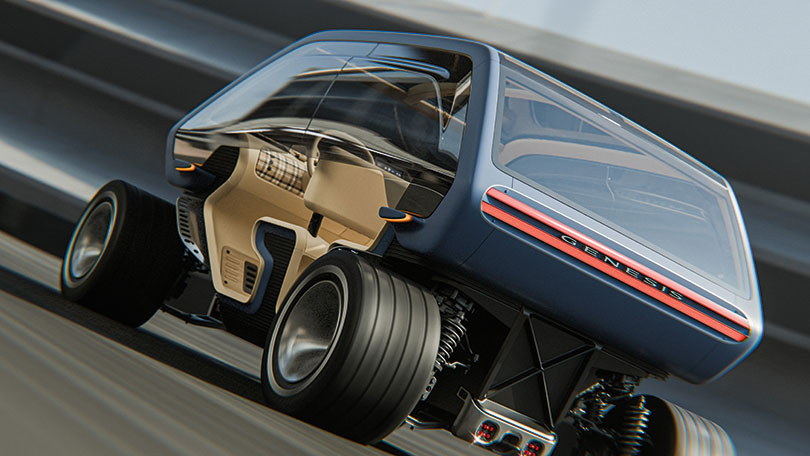
Donckerwolke has also described the vehicle as paddock transportation, pointing to the name as a reference to the pit box. It uses four-wheel steering, four-wheel drive, steer-by-wire and brake-by-wire systems, making it less of a novelty cart and more of a compact demonstration of advanced vehicle control.
For the golf car and low-speed vehicle world, the Box Buggy matters because it shows how far the category’s image has moved. A golf cart was once just a course utility vehicle with cup holders. Now, luxury brands, motorsport divisions and EV technology suppliers are starting to see small electric vehicles as design platforms. They can be hospitality vehicles, resort transport, neighborhood cruisers, racing paddock equipment or attention-grabbing concept machines.
No one is likely to see a Genesis Box Buggy lined up outside the starter shack anytime soon. But that is not really the point. The point is that Genesis took the category seriously enough to make something absurdly cool out of it. And once luxury automakers start having fun with golf carts, the rest of the industry should probably pay attention.