New low-speed electric vehicles are starting to appear on public roads across Central Oregon, signaling a broader shift in how Americans think about short-distance transportation.
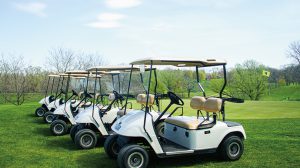
For decades, golf cars occupied a very specific corner of American life. They belonged on fairways, inside retirement communities, or occasionally weaving through beach towns driven by somebody carrying a cooler and absolutely no sense of urgency.
Now they are showing up on actual streets, as reported by Central Oregon Daily.
Not highways, of course. Nobody is merging a golf car into interstate traffic and living to tell the tale. But throughout places like Central Oregon, a growing number of street-legal low-speed vehicles are beginning to blur the line between golf car and neighborhood transportation.
And honestly, once you see it happening, it suddenly feels a lot less strange than it probably should.
At the center of the movement are neighborhood electric vehicles, often referred to as NEVs or low-speed vehicles. These upgraded cars are equipped with headlights, seat belts, turn signals, reinforced windshields, mirrors, and registration requirements that allow them to legally operate on certain public roads. In many areas, they can travel on streets posted at 35 miles per hour or below.
That distinction matters because these are no longer simply golf course accessories. They are increasingly being marketed as legitimate transportation for short local trips.
In Bend and other parts of Central Oregon, dealerships are seeing growing interest from buyers who want alternatives to full-sized vehicles for nearby errands, neighborhood commuting, or casual local travel. Chris DeJon of Mt. Bachelor Carts and Parts described them as vehicles designed for “cruising around town,” particularly on lower-speed roads where full-sized vehicles often feel excessive.
And that may be the real reason this category is expanding.
Modern American life is filled with absurdly short car trips. People routinely fire up massive SUVs to drive two miles for coffee, groceries, school pickups, or gym runs. Low-speed electric vehicles appeal to buyers who look at that routine and quietly think, “This feels unnecessary.”
The vehicles themselves have also changed dramatically.
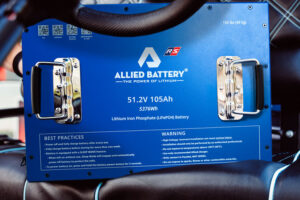
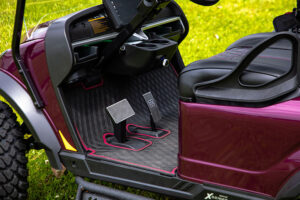
Today’s neighborhood electric vehicles barely resemble the bare-bones golf cars people remember from municipal courses in the 1990s. Many now feature lifted suspensions, touchscreen displays, Bluetooth audio systems, luxury seating, extended-range lithium batteries, and custom lighting packages. Some cost well into five figures, which is roughly the moment many people realize this trend has officially entered “lifestyle purchase” territory.
And yet the appeal keeps growing.
Part of the attraction is convenience. Part is novelty. Part is the undeniable reality that driving around in a small electric car simply feels different than sitting inside another anonymous crossover surrounded by traffic and stress.
People wave at golf cars.
Nobody waves at a regular car.
That social factor may sound silly, but it repeatedly surfaces in communities where street-legal golf cars become popular. Drivers describe them as more conversational, more community-oriented, and more relaxed than traditional vehicles. Even critics admit they create a different kind of neighborhood atmosphere.
Of course, not everyone is thrilled.
As golf cars and low-speed vehicles spread into suburban streets, concerns about safety, traffic flow, underage drivers, and roadway compatibility continue to follow close behind. Critics argue that many of these vehicles are still fundamentally underprepared for roads originally designed around larger, faster automobiles.
And they are not entirely wrong.
The legal landscape itself remains complicated because regulations vary significantly by state and municipality. In Oregon, for example, standard golf cars generally cannot operate freely on public roads unless local ordinances specifically allow it. Low-speed vehicles, however, can qualify for registration and road use if they meet federal safety standards and speed requirements.
That distinction creates confusion for buyers who often assume every lifted electric car they see online automatically qualifies as street legal.
It does not.
Drivers typically still need valid licenses, insurance, registration, and federally required safety equipment depending on the classification of the vehicle and local laws. Requirements often include headlights, brake lights, mirrors, windshields, seat belts, turn signals, and vehicle identification numbers.
Still, the broader momentum appears real.
Across the country, low-speed vehicle usage has expanded far beyond golf communities into suburbs, downtown districts, resort areas, master-planned developments, and coastal towns. The market itself has reportedly grown dramatically since the pandemic as buyers seek alternative transportation options for local travel.
In many ways, golf cars are becoming the physical version of a larger cultural shift. Americans increasingly want transportation that feels smaller, simpler, quieter, and less aggressive than the oversized vehicle arms race that has dominated roads for years.
Whether low-speed vehicles become a lasting transportation category or remain a niche suburban curiosity remains unclear.
But one thing is becoming obvious.
The next time you pull up at a stop sign and see what appears to be a golf car waiting beside you, there is a decent chance it actually belongs there.