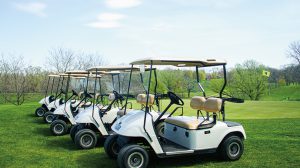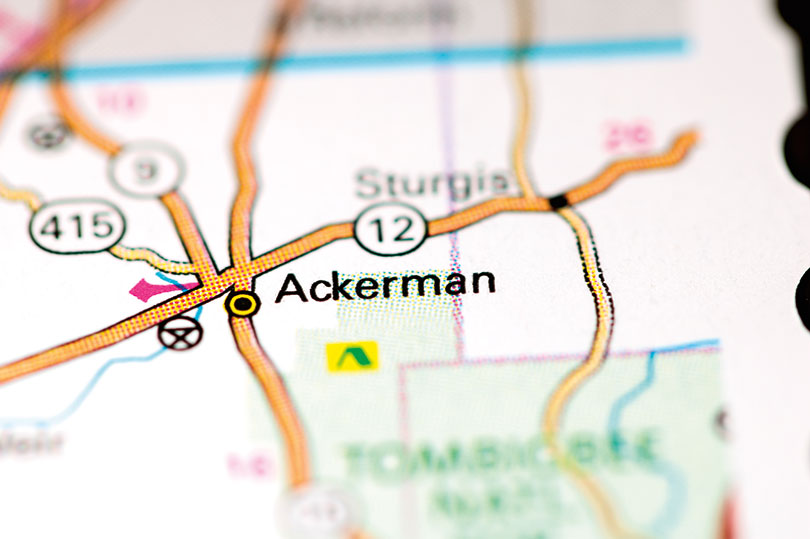
With a new ordinance in place, Ackerman residents will soon be able to drive approved golf cars on town streets, a move leaders hope will make the community feel a little more connected.
There are some policy moves that get pitched as transportation upgrades, others as safety measures, and a few as quality-of-life improvements. In Ackerman, Mississippi, the new golf car ordinance appears to be all three at once, with a healthy dose of neighborliness folded in for good measure.
Town leaders have approved an ordinance allowing residents to operate golf cars on streets in Ackerman, provided those cars meet inspection and equipment requirements. Starting May 1, residents can bring their golf cars to town hall for inspection. If the vehicle passes, the owner pays a $15 fee and receives a decal that signals compliance. It is a simple enough system, but the reasoning behind it says something bigger about how the town sees itself.
“We just want to give everyone in town a way to get out and visit their neighbors and really bring the community together,” Mayor Lauren Carson told WTVA.
That may sound almost old-fashioned, which, honestly, is part of the charm. In a lot of places, golf car ordinances are framed almost entirely around liability, speed limits, and whether someone is going to do something dumb at an intersection. Ackerman has those concerns too, of course. But the emphasis here feels notably more human. The ordinance is not just about letting people drive a golf car. It is about making it easier to move around town in a way that feels social, accessible, and distinctly small-town.
The rules are still clear. Golf cars will be allowed only on roads where the speed limit is under 35 miles per hour, and there is a difference between a basic golf car and one considered street-approved. That distinction matters because turning a golf car into something fit for public roads is not just a matter of optimism and a fresh battery.
Gary Gardner of GTO Golf Kars in Mathiston, whose business specializes in helping owners meet ordinance requirements, laid it out plainly. A street-legal car must have seat belts, headlights, taillights, blinkers, brake lights, and DOT tires. It also needs to be capable of operating above 20 miles per hour but below 25. In other words, the town is not opening the gates to anything with four wheels and a steering wheel. There is a baseline standard for safety, and owners will need to meet it.
That kind of structure is becoming more common as towns across the South warm to golf cars as legitimate short-distance transportation. What used to be mostly associated with private clubs and retirement communities has spread into neighborhoods, downtown districts, and small-town streets where people are looking for practical alternatives to hopping in a car for every little trip.
Gardner and his wife say they also helped with a similar ordinance in Starkville, which suggests a growing familiarity with this kind of rollout. Communities are not just deciding whether they like golf cars; they are learning how to regulate them in ways that preserve convenience without inviting chaos.
For Ackerman, the payoff could be cultural as much as practical. A golf car is slower, more visible, and a lot more conversational than a pickup truck with the windows up. People wave. They stop. They notice one another. In a time when plenty of towns are trying to figure out how to preserve a sense of community, there is something oddly effective about giving people a legal reason to move at 22 miles per hour.