Two new research projects funded by the Golf Course Superintendents Association of America aim to improve turf health and long‑term sustainability for golf courses nationwide.
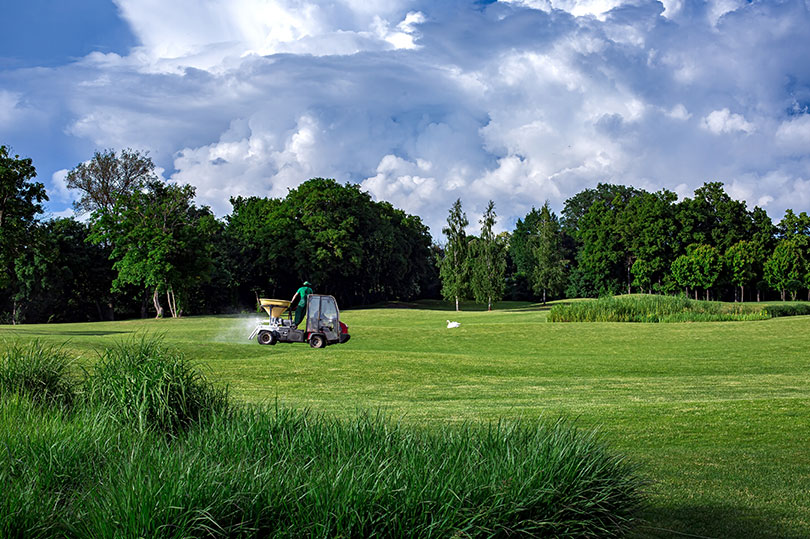
rse turf is a complex science involving soil health, pest management, and environmental stewardship. To advance that science, the Golf Course Superintendents Association of America has announced funding for two new research projects focused on improving the sustainability and resilience of golf course turfgrass.
The projects will receive funding through the GCSAA Foundation’s research endowment program, which supports university-led studies aimed at solving practical challenges faced by golf course superintendents.
Each of the newly selected projects will receive up to $100,000 in funding and will run for a two-year research period, as reported on golfcourseindustry.com.
One of the funded projects will be led by Paul Koch, Ph.D., of the University of Wisconsin–Madison. Koch’s research will focus on developing alternative strategies to manage dollar spot, one of the most common and damaging turf diseases affecting golf courses worldwide.
Dollar spot creates small circular patches of dead turf that can spread rapidly if not properly managed. The disease often requires chemical treatments, which can be costly and environmentally challenging.
Koch’s study aims to explore new integrated approaches that combine cultural practices and emerging technologies to reduce reliance on traditional chemical controls.
The second project will be led by William T. Crow, Ph.D., from the University of Florida. Crow’s research will focus on nematodes, microscopic organisms that live in soil and can damage turfgrass root systems. Certain nematode species feed on plant roots, weakening turf and making it more susceptible to drought and disease.
The project will examine strategies for managing nematode populations while preserving the long-term health of golf course turf.
Both studies were selected by a review committee that included GCSAA board members, university researchers, superintendents, and other scientific professionals from across the golf industry.
The association currently supports nine ongoing university research initiatives, representing more than $582,000 in funding dedicated to applied turfgrass science.
These investments reflect the growing emphasis within the golf industry on sustainable course management practices.
Modern superintendents face increasing pressure to balance high playing standards with environmental responsibility. Research programs like those funded by the GCSAA provide practical solutions that help courses reduce chemical use, conserve water, and maintain healthier ecosystems. As climate conditions continue to shift and maintenance costs rise, these scientific efforts are expected to play an increasingly important role in the future of golf course management.