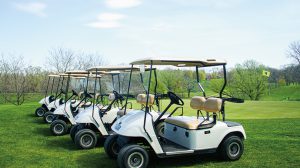
A new shop in Colwood wants golf cars to become a regular part of local transportation, offering short-distance electric travel that feels equal parts practical and slightly ahead of its time.
The first time you see a golf car cruising through a downtown corridor, your brain does a double take. It looks like someone accidentally drove off a resort property and forgot to turn around. Then you see another one. And another. Eventually the novelty starts fading and a different thought creeps in: maybe this actually makes sense.
That is the thinking behind a new business in Colwood, Canada. Carts West is betting that the future of local transportation may look smaller, slower, quieter and a whole lot more relaxed than the oversized vehicle culture North Americans have grown used to.
Located near Veteran’s Memorial Parkway, the company specializes in sales, rentals, and repairs of low-speed electric golf cars approved for road use under Canadian regulations. Co-owner Winston Michell believes people are beginning to rethink what transportation really needs to look like for short daily trips, as reported by ChekNews. Not every errand requires two tons of steel, an SUV payment, and a stop at the gas station that somehow costs the same as a decent dinner out.
It is not a completely wild concept when you think about how most people actually move around their communities. Coffee runs. Grocery pickups. Visiting friends across town. School drop-offs. Quick neighborhood errands. The average trip is often shorter than people realize, which is exactly where these vehicles start making a surprisingly convincing argument.
Michell and his wife, Samantha Tough, say part of the inspiration came from watching golf car rentals gain popularity around downtown Victoria. Once they saw people regularly using them for practical transportation instead of strictly leisure, the idea stopped feeling gimmicky. It began looking like a legitimate solution for modern urban life, particularly in communities where roads are calming down and residents are becoming more conscious about fuel costs, congestion, and environmental impact.
Of course, there are rules. These are not free-range golf cars wandering the streets like escaped resort shuttles. Transport Canada-approved low-speed vehicles can only operate on roads with speed limits of 50 kilometers per hour or lower. Drivers must follow normal traffic laws, and municipalities can establish additional restrictions. Colwood allows them on roads up to 50 km/h, while nearby Langford caps usage at 40 km/h. Sidewalks and bike lanes remain off-limits.
That patchwork of local regulations could complicate adoption, especially if neighboring municipalities all approach the category differently. But it also reflects the reality that cities are still figuring out where these vehicles fit into the broader transportation ecosystem. They are not bicycles. They are not full-sized cars. They exist in a strange middle ground that suddenly feels very relevant.
There is also a cultural shift happening underneath all of this. For decades, North American transportation has leaned heavily toward bigger, faster, and more aggressive. Entire vehicle classes have ballooned in size. Parking spaces somehow feel too small even though the spaces did not shrink. Meanwhile, communities are increasingly prioritizing walkability, traffic calming, and localized movement.
That is where golf cars quietly slide into the conversation.
They offer electric convenience without requiring the full commitment of traditional EV ownership. They are easier to park, inexpensive to operate and oddly well-suited for coastal or suburban communities where daily driving often happens within a few miles of home. Plugging one in overnight feels less like managing a vehicle and more like charging a large household appliance.
The appeal may also be psychological. Driving a golf car tends to slow people down a little. There is less rushing, less weaving through traffic and significantly less road rage energy radiating from behind the wheel. Nobody climbs into a golf car looking to dominate the left lane. The entire experience feels more neighborhood-oriented and less combative.
That does not mean they are about to replace traditional vehicles, nor should they. Families still need larger transportation. Highways still exist. Long-distance travel is not happening in a golf car unless someone has extraordinary patience and absolutely nowhere urgent to be. But for localized transportation, they occupy a compelling niche.
Carts West appears to understand that success will depend less on convincing people with technical specifications and more on simple exposure. The more people see these vehicles functioning normally in everyday life, the less unusual they appear. And once something becomes normal, adoption tends to accelerate quickly.
Right now, golf cars still carry a faint vacation association. They remind people of beach towns, resorts, and gated communities. But plenty of once-niche transportation ideas eventually became mainstream after society adjusted its perspective. Electric bikes followed a similar trajectory. So did scooters. At one point ride-sharing apps sounded bizarre too. Now people summon strangers with cars using their phones without a second thought.
The West Shore may still be early in that process, but Carts West is betting the transition has already started. And honestly, once people realize they can handle a surprising number of daily trips with something smaller, simpler and electric, the idea begins sounding a lot less quirky.
Sometimes the future does not arrive with flying cars and dramatic music. Sometimes it quietly rolls into town at 25 miles per hour carrying groceries.